
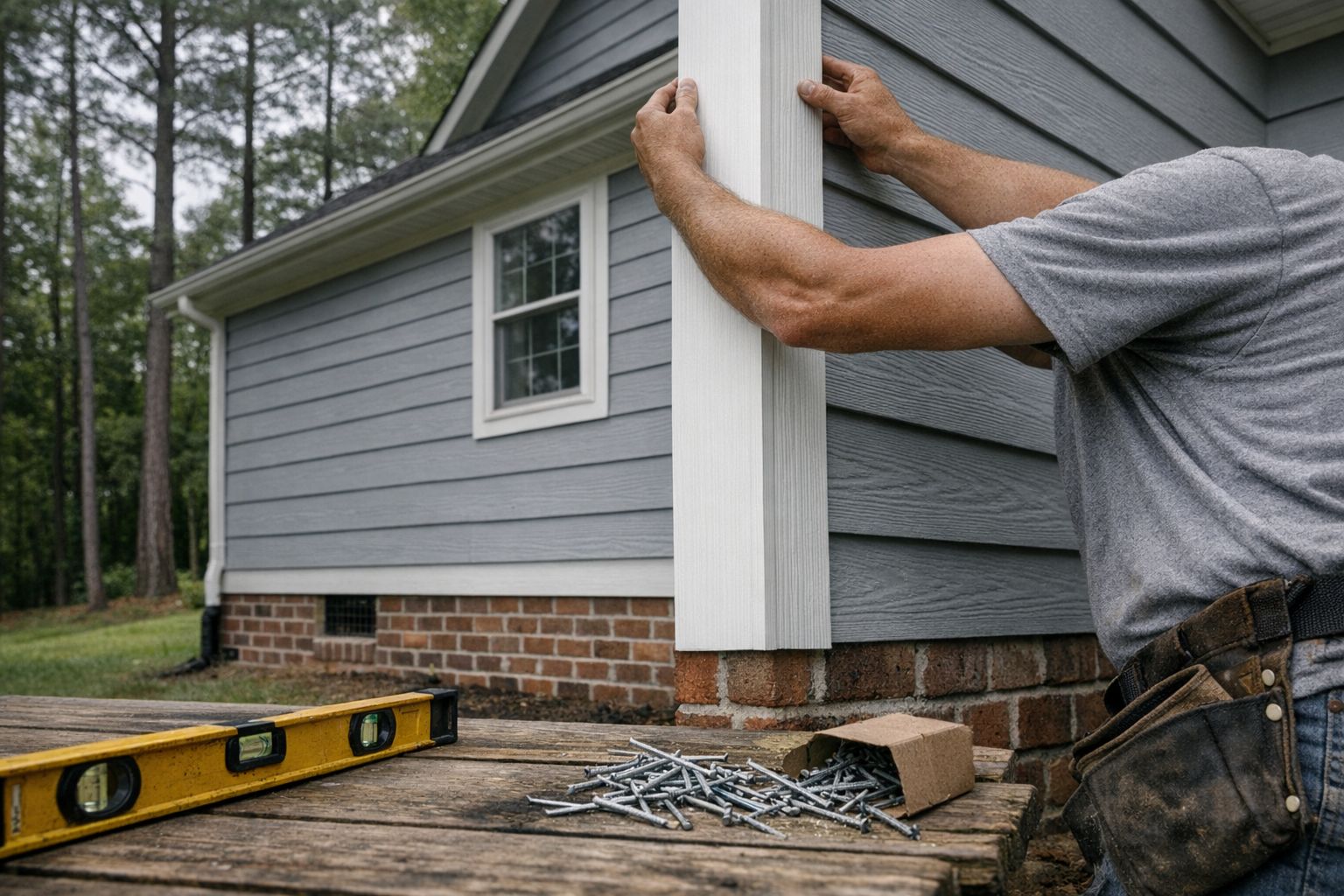
Fiber Cement Siding Installation in Durham, NC
Quick answer
Fiber cement siding is a dense, engineered material made from cement, sand, and cellulose fibers that resists fire, pests, and moisture better than wood or vinyl while holding paint and profile detail for a traditional look. Installation typically takes about a week to two weeks depending on home size, and it’s a common choice for homeowners planning to stay long-term.
For homeowners who want the classic look of wood siding without wood’s vulnerability to rot and pests, fiber cement has become one of the most popular upgrades in the Triangle. It costs more upfront than vinyl, but many homeowners find the added durability and curb appeal worth the difference, especially for homes they plan to keep for years.
Why Homeowners Choose Fiber Cement Siding
- Excellent resistance to moisture, rot, and pests — a real advantage during Durham’s long, humid summers
- Fire-resistant composition, offering a level of protection wood siding can’t match
- Holds paint significantly longer than wood, meaning less frequent repainting
- Available in profiles that closely mimic traditional wood grain, lap siding, and shingle-style looks
- Dense, impact-resistant material that stands up well to hail and debris compared to vinyl
Fiber Cement vs. Vinyl: Making the Right Choice
Fiber cement generally costs more than vinyl for both material and installation, reflecting its added weight, durability, and the specialized cutting and fastening it requires. For historic homes, homes in neighborhoods with strong architectural character, or anyone planning to stay in their home long-term, that added cost often pays off in appearance and longevity. For newer builds or shorter ownership horizons, vinyl may offer a better value. We’ll talk through both honestly during your estimate rather than pushing the higher-margin option.
Our Fiber Cement Installation Process
Assessment and Product Selection
We review your home’s style and discuss plank size, texture, and finish options, including pre-primed or factory-finished products.
Preparation and Barrier Installation
Old siding is removed if present, sheathing is inspected and repaired as needed, and a water-resistant barrier is installed before any fiber cement goes up.
Cutting and Installation
Fiber cement requires specific tools and cutting techniques to avoid cracking and to manage the fine dust the material produces — our crews are equipped and trained for this specifically.
Painting and Finishing
Depending on the product chosen, final painting or touch-up work completes the installation, along with trim and corner detailing.
What Affects the Cost of Fiber Cement Siding
- Plank size, texture, and whether the product is pre-finished or requires on-site painting
- The size and architectural complexity of the home
- Whether old siding needs removal and how much sheathing repair is required
- Regional labor costs, since fiber cement installation demands more specialized handling than vinyl
We provide a clear, written estimate after assessing your home in person, so you know exactly what’s driving your specific price.
Service Area
We install fiber cement siding throughout Durham and the surrounding Triangle, including Chapel Hill, Cary, Hillsborough, Morrisville, Carrboro, Mebane, Wake Forest, and Butner.
Get a Free Fiber Cement Siding Estimate
See whether fiber cement is the right long-term investment for your home. Call (984) 369-2980 or request your free, no-obligation estimate today.
Fiber Cement Siding FAQs
With proper installation and maintenance, fiber cement siding commonly lasts several decades, often outperforming vinyl and wood over the long term.
Less often than wood — many products hold factory or field-applied paint for well over a decade before needing a fresh coat, depending on sun exposure and product quality.
Yes, it requires specialized tools, cutting techniques, and more labor, which is part of why installation costs more than vinyl.
Yes — it’s a popular choice specifically because many profiles are designed to replicate traditional wood siding looks while offering better durability.
For homeowners planning to stay long-term or prioritizing durability, fire resistance, and appearance, many find it worth the investment. For shorter ownership horizons, vinyl may be the more practical choice.