
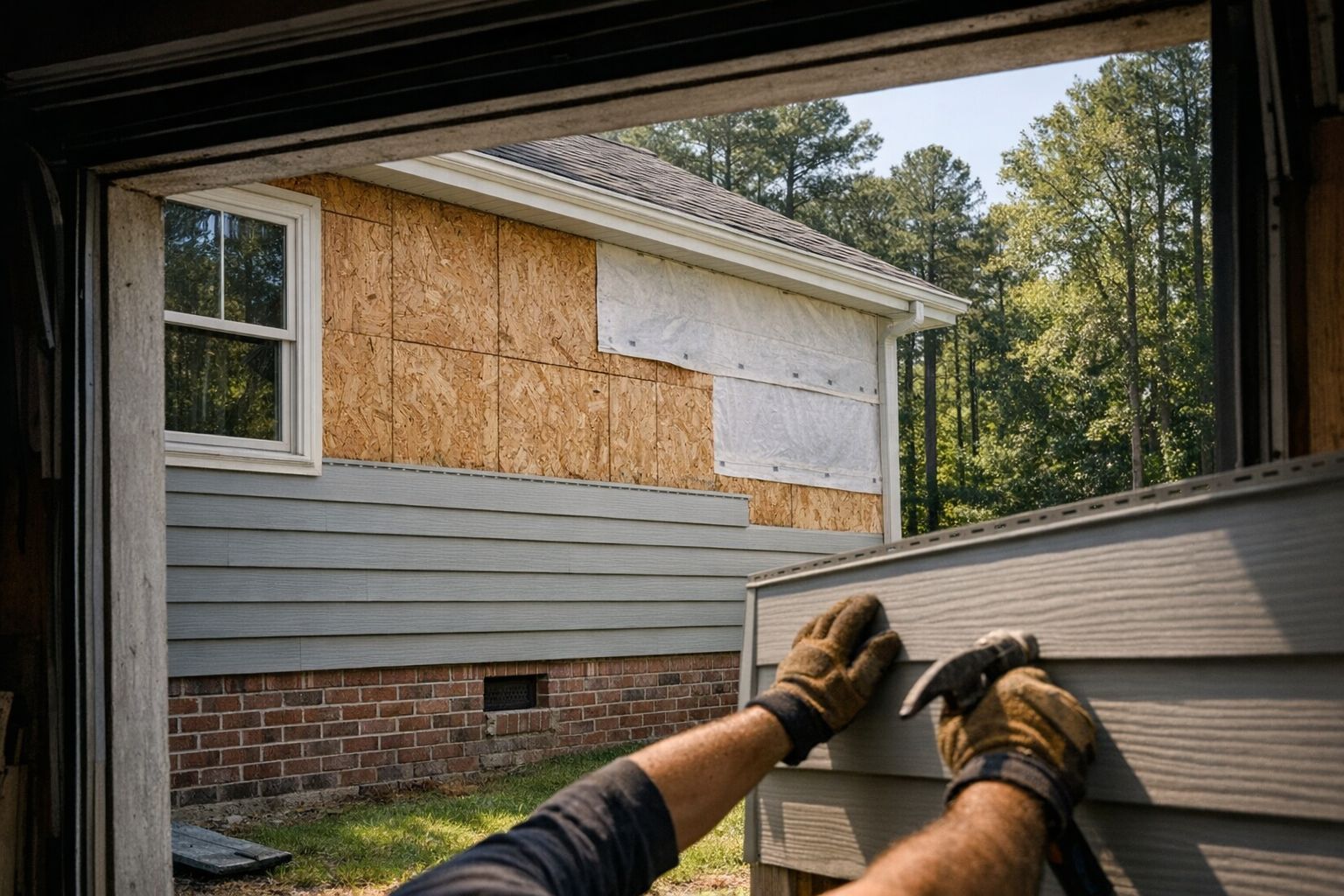
Vinyl Siding Installation in Durham, NC
Quick answer
Vinyl siding is a low-maintenance, budget-friendly exterior material that resists moisture well and rarely needs repainting, making it a common choice for Durham homeowners upgrading from older wood siding or building new. Installation typically takes a few days to about a week depending on home size.
If you’re weighing siding options and want something that balances upfront cost, appearance, and long-term upkeep, vinyl siding is worth serious consideration. It’s one of the most widely installed siding materials in the country for good reason — and in a humid climate like Durham’s, its resistance to moisture-driven rot is a real practical advantage over untreated wood.
Why Homeowners Choose Vinyl Siding
- Lower upfront material and labor cost compared to fiber cement or other premium options
- Minimal maintenance — no repainting, and cleaning is usually as simple as a rinse with a hose
- Good resistance to moisture and humidity, which matters throughout North Carolina’s long, wet summers
- Wide range of colors, textures, and styles, including options that mimic traditional wood grain
- Doesn’t attract wood-boring pests the way untreated wood siding can
Is Vinyl Siding Right for Your Home?
Vinyl tends to make the most sense for homeowners prioritizing value and low upkeep, for newer construction, and for homes where budget is a primary factor. It’s a common choice throughout Triangle subdivisions and newer neighborhoods where consistent style and easy maintenance matter.
It may be less ideal for homeowners restoring historic homes where an exact traditional wood look is a priority, or in situations where maximum impact and fire resistance are the top concern — fiber cement is often a better fit in those cases, and we’re happy to walk through that comparison during your estimate.
Our Vinyl Siding Installation Process
Assessment and Material Selection
We start by looking at your home and discussing color, style, and panel profile options that fit both your taste and your home’s architecture.
Preparation
Old siding, if present, is removed and the wall is inspected and prepped, including addressing any sheathing issues found underneath.
Barrier and Installation
A water-resistant barrier goes on first, followed by vinyl panels installed with the correct spacing to allow for natural expansion and contraction with temperature changes — a detail that affects how well the siding performs over time.
Trim and Final Details
Corner posts, J-channel around windows and doors, and other trim pieces are completed to give the installation a clean, finished look.
What Affects the Cost of Vinyl Siding
- The size and shape of your home, including the number of corners and architectural features
- The specific panel style, thickness, and profile you choose
- Whether existing siding needs removal before installation
- Any sheathing repairs discovered during the process
We provide a clear, itemized quote after seeing your home in person, so you’re never estimating from a generic range.
Service Area
We install and repair vinyl siding throughout Durham and the surrounding Triangle, including Chapel Hill, Cary, Hillsborough, Morrisville, Carrboro, Mebane, Wake Forest, and Butner.
Get a Free Vinyl Siding Estimate
Find out whether vinyl siding is the right fit for your home and budget. Call (984) 369-2980 or request your free, no-obligation estimate today.
Vinyl Siding FAQs
With proper installation and basic care, vinyl siding commonly lasts several decades, though exact lifespan depends on product quality, climate exposure, and maintenance.
Some fading is normal over many years of UV exposure, though higher-quality vinyl products are formulated to resist this better than budget-grade material.
No — any damaged sheathing should be repaired first. Installing over compromised sheathing can trap moisture and lead to bigger problems down the road.
Most vinyl siding can be cleaned with a garden hose and mild soap using a soft brush for stubborn spots; pressure washing should be done carefully to avoid forcing water behind panels.
Yes — vinyl doesn’t rot or absorb moisture the way wood can, which makes it a practical option for the Triangle’s long, humid summers.